Google is introducing an update to Google Discover that allows users to customize their feed content more directly using natural language.
This feature enables users to tell Google which specific topics or links they want to see more or less frequently in Discover, simply by stating it in their own words.
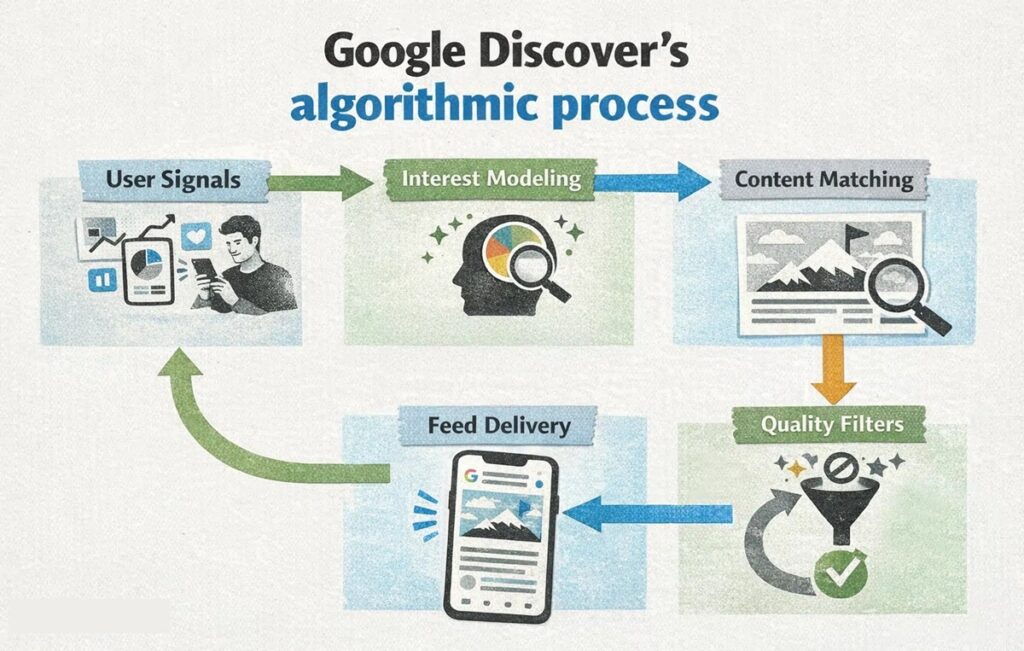
Until now, Google Discover has relied on various signals to estimate content that aligns with user interests.
The system learns habits through activities such as opening articles, performing searches, following topics, hiding content, or indicating a lack of interest in specific sources.
With this update, users gain a more explicit way to guide the algorithm. Instead of merely providing signals through behavior, users can directly explain the type of content they wish to see.
Customizing Google Discover via Prompts
According to 9to5Google, a prompt-based interface allows users to input instructions regarding the content they want to see more or less of.
Google may also ask follow-up questions to clarify these preferences. Once the user provides instructions, the Discover feed display adjusts quickly.
The system remembers these preferences, maintaining the adjustments for future recommendations. This feature makes Google Discover personalization feel more interactive.
Users are no longer entirely dependent on the algorithm to understand their interests; instead, they can directly explain what content they consider relevant.
Once available, users can tap the three-dot menu or a dedicated card to enter a prompt. Google has been testing this capability since last year and is now beginning a wider rollout over the coming days.
Changing How Users Control Their Feed
Google Discover has traditionally operated by learning about users through their activity. The system observes what users open, search for, follow, ignore, or hide, then translates these signals into predictions about the content they might want to see next.
While this approach does personalize the feed, users do not always have direct control when recommendations begin to stray from their interests.
Natural language-based controls offer a simpler mechanism. Users can directly express their intent without needing to train the system through a series of small actions.
This shift also highlights Google Discovers position as a hybrid between a search engine and a content feed.
Unlike Google Search, which waits for users to enter keywords, Discover proactively presents content deemed interesting before the user even searches for it.
With the introduction of prompts, users can now help steer these predictions. The Discover experience becomes more conversational, as users can convey their preferences and the system adjusts its recommendations accordingly.

Google News Introduces Audio Briefing Settings
Alongside the Google Discover updates, Google is introducing personalization features for daily audio briefings in Google News.
Users will be able to select specific topics to include in their audio briefings from a range of categories. Options include top stories, business, entertainment and lifestyle, sports, science and technology, and various other categories.
Settings can be further refined within each category. In the Entertainment section, for instance, users can choose specific topics such as art and design, movies, music, theater, and TV.
These options allow the daily audio briefing to be tailored to the user’s specific interests, ensuring the information they hear goes beyond a standard general news lineup.
Google Introduces “Preferred Source” Button for Publishers
Another update is aimed at publishers. Google is now offering an interactive “preferred source” button that can be embedded directly onto publishers’ websites.
When a reader clicks the button, the publication is added as a preferred source. The reader is then immediately redirected back to the exact spot they left on the publisher’s page.
This feature applies to the “top stories” carousel in Google Search, AI overviews, and AI modes. The button provides a new way for publishers to encourage readers to select their publication as a frequently accessed source.
Impact on Publishers and Content Strategy
Changes to Google Discover also carry implications for publishers and brands. User preferences may become more active, as readers can directly specify the topics they want rather than merely signaling their interests through clicks and other activities.
Content must still be relevant to appear before readers. However, the definition of relevance is likely to be increasingly shaped by what users explicitly tell the system, in addition to the behavioral signals used previously.
For publishers, this makes understanding audience needs increasingly critical. Content that aligns with specific user interests stands a better chance of securing a prominent spot within the personalized experience.
This update also aligns with shifts in Google’s interface toward greater use of AI and natural language.
Users are increasingly guided to provide direct instructions rather than relying solely on conventional menus, buttons, and settings.
Ultimately, Google Discover is evolving beyond a system that merely predicts what users want to read. With prompt-based controls, users can play a more active role in shaping the direction of their feed.